Before & After Organizing
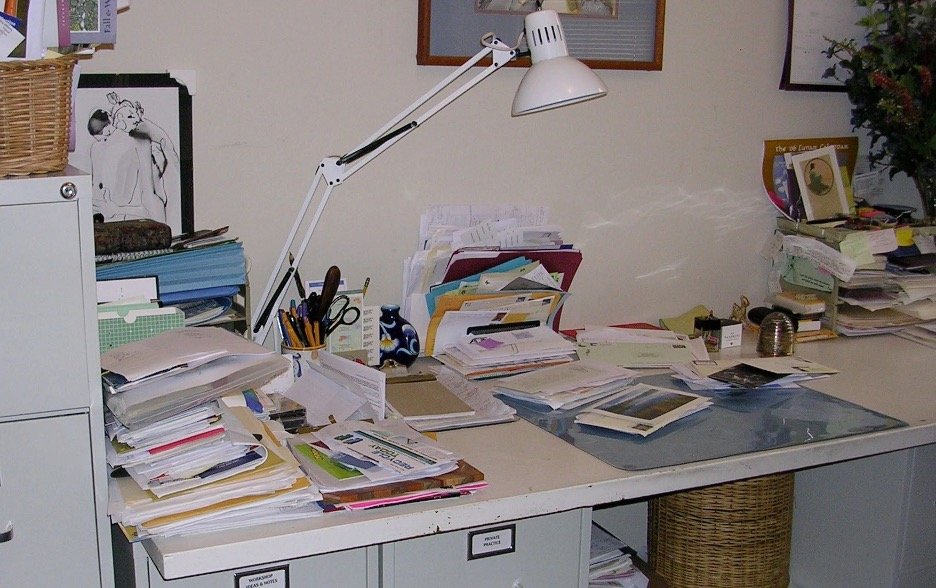
A writer's desk: Important mail and projects were in various places, stacks of project-related paperwork were in plastic horizontal sorters that were broken and caving in. Projects piled up and left no desk area for actual work to take place. Piles of paper had to be dug through to find the next project, and everything had to be shifted around to find needed details. This busy writer felt that she wasted a lot of time looking for things she needed. She preferred the tactile nature of physical paper rather than a digital system, but her current process wasn’t functional.
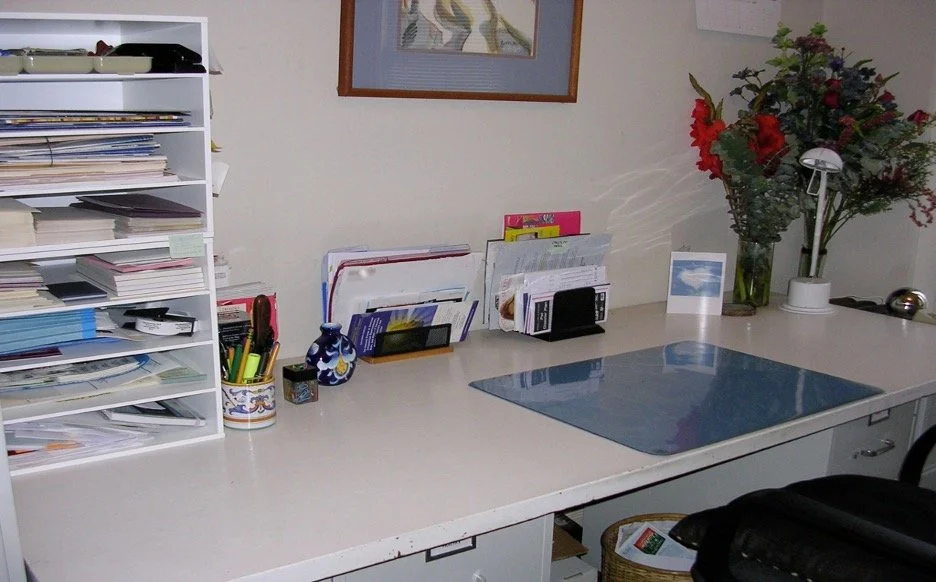
The plastic sorters that were falling apart were replaced with desktop cubes to hold all writing supplies. The bottom shelf of the unit was left empty to allow her to stash some current project-related materials there instead of piling it up in front. Two vertical sorters already on the desk were given new jobs, one is now used for important personal matters and the other is for business that is time-sensitive. Old papers and projects were filed away or recycled if no longer needed. Many of the piles previously on the desk were the writer's way of keeping track of projects that needed to be worked on. A calendar system was created on her computer to keep track of upcoming writing deadlines and events, which allowed her to keep necessary paperwork in file drawers instead of on her work surface.
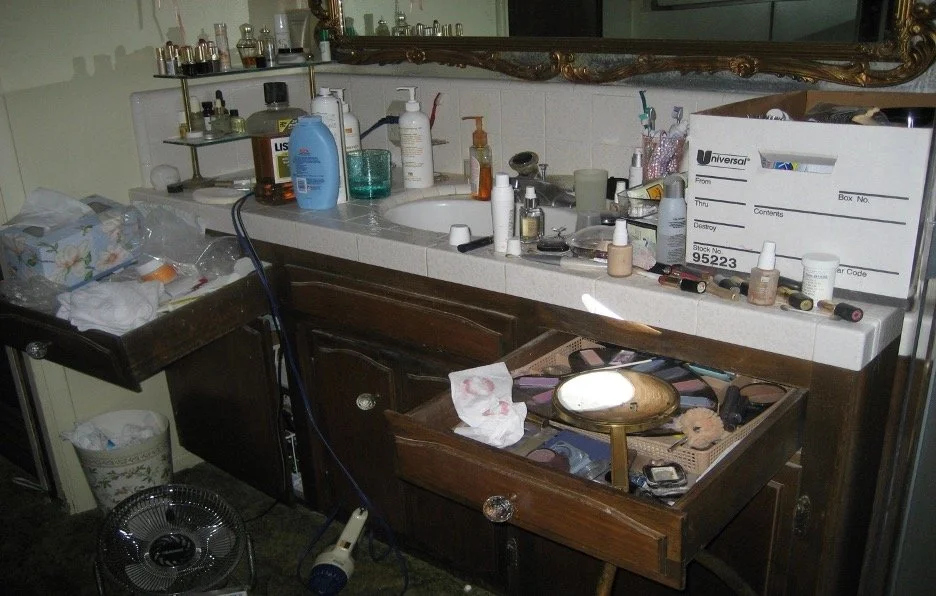
An elderly woman's bathroom: This client had mobility issues due to arthritis and Parkinson's and was unable to easily access the cabinets under the drawers. She had a box full of products on the counter that she would rummage through each day to get what she needed. The drawers were left open all the time because of limited counter space. There was a large decorative shelf taking up quite a bit of space on the counter being used to hold lipsticks and small bottles; it was very inefficient for this purpose. The woman felt that her daily routines took more time than necessary and her digging around contributed to extra soreness and tiredness. She was so tired of looking at the "mess" that she didn't even want to go in there. She needed to be organized in a way that took her limited mobility into consideration.
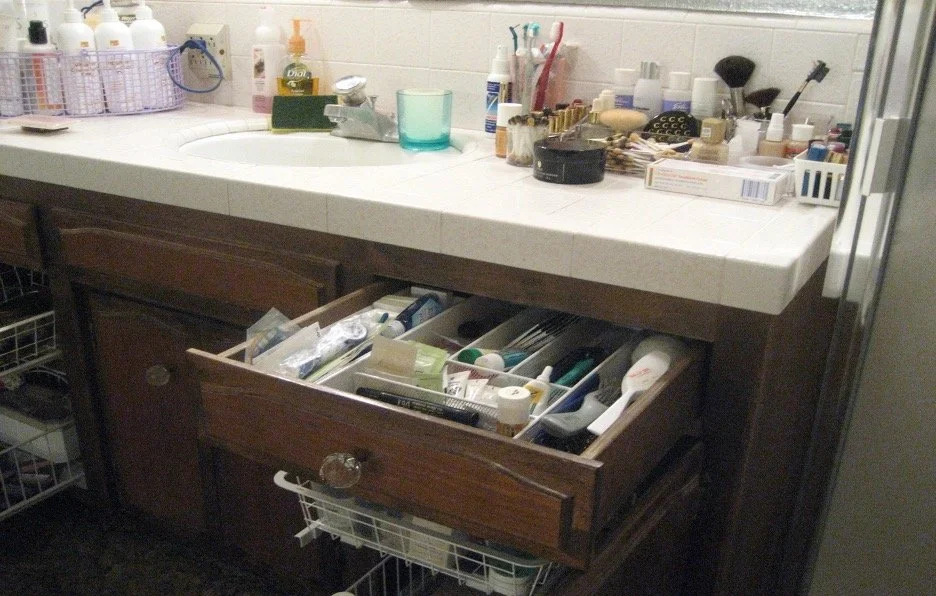
All expired products and medications were removed. Sliding baskets on rails were installed in the cabinets to allow easy access, some of the products from the countertop were moved to the new sliding baskets since they would now be accessible. Divider trays were put in the drawers and contents were organized. A clear plastic make-up holder was purchased for the countertop to hold brushes and other utensils. Products used daily were left out on the counter for easiest access. The decorative tray was put on a shelf on the other side of the bathroom, where it could still be admired but not be in the way.